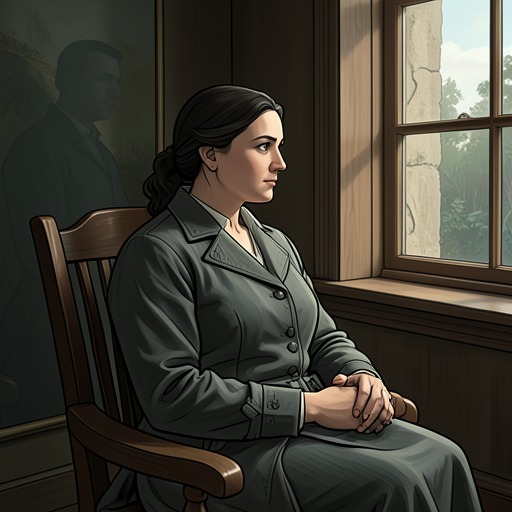
“What is this terror What is this ecstasy It is Clarissa”
Mrs DallowayPeter Walsh’s question about the terror and ecstasy filling him resolves in the recognition that it is Clarissa, present before him. The expression gathers the novel’s final emotional suspense into a moment of discovery: an overwhelming feeling finds its object, though the feeling itself remains more complex than a simple declaration of happiness.
Wording and Recognition
After saying that he will come, Peter remains seated for a moment. He wonders inwardly, “What is this terror? what is this ecstasy? What is it that fills me with extraordinary excitement?” The question does not identify a single cause; its paired terms hold fear and exhilaration together, while the repeated inquiry registers his inability, at first, to account for the intensity of his response.
The answer arrives as a short recognition: “It is Clarissa.” The movement from questions to naming gives the expression its force. Peter’s emotion is not explained away; it is attached to the person whose presence has filled the moment with significance.
Presence and Ending
The recognition is followed by the immediate confirmation, “For there she was.” Its plainness grounds Peter’s inward excitement in a visible fact: Clarissa is present. The closing sequence thus moves from his hesitation, through the naming of Clarissa, to the scene’s simple assurance of her presence.
Placed at the novel’s end, the expression leaves Peter’s response vivid but unresolved. Terror and ecstasy remain together, rather than being reduced to one settled emotion; the final recognition gives that charged feeling a focus in Clarissa and ends on her presence.